Friday, 3 October 2014

Haider

                                                           
       With Haider, Vishal Bharadwaj completes his trio of Shakesperean tragedies, saving the toughest for the last.
Hamlet, as we all know by now, is the longest of the bard’s plays and takes about four and half hours to be acted out in its entirety. To my mind, it is also the more complicated of his works because the theme is not woven around right and wrong or good and evil, it is about indecisiveness. And revenge of course, but no one needs to spell that out.
In Haider, Bharadwaj manages to cut it down to about two hours and forty minutes.  It is evident from the way the movie is made that Bharadwaj wanted the trilogy to end on a high note and consciously worked towards that goal. The camera and editing work are razor sharp, the locations picturesque, characters well defined, the treatment poignant, yet grand. 
The good thing about Bharadwaj’s movies is that you don’t need to know Shakespeare to appreciate and enjoy them. The very good thing about his movies is that if you do know Shakespeare, your appreciation of what Bharadwaj is doing is magnified. Of course, it helps that basic human emotions—love, jealousy, hatred, sympathy etc remain constant through time, space and geographies and the 16th century master has already given us the best plots built around them.
Bharadwaj internalizes Shakespeare in a way that is awe inspiring. In Haider he has gotten closer to the original text of the play than he was in Maqbool and Omkara,  in a way that can excite a student of literature. Yet, he is bold enough to depart from the original script in the very end. He has the student poet, for the student prince. You can’t have a Lord Chamberlain in modern day Kashmir, so his equivalent is the head of the police department.  There are the gravediggers and there are the courtier equivalents , there is the theme of Oedipus complex touched upon, there is the moment of his skull sighting and monologue, but what definitely takes the cake is Bharadwaj’s clever twist to the Ghost and the rendition of the famous “to be or not to be” soliloquy.  What good would a Hamlet be without that?
In Haider we have “Roohdar”, who is the rooh to father Hamlet’s jism. See?  That’s what makes a good adaptation. 
Setting Haider in Kashmir was a smart touch that adds uniqueness and an extra layer of complexity but Bharadwaj could have used any backdrop for this.
Then again, a tale of a series of misunderstandings and complex human relationships  that lead to death and devastation. Where have we seen that before? 
You’re right, almost everywhere in various avatars. Which is why Kashmir works. It’s that extra something to hold your audience in place, especially those who don’t find analyzing layers of  human relationships a worthwhile investment of time and money.
And yet, at times you might get restless. It is, after all, a long movie. Good as Haider is, it lacks the “chutzpah” of Omkara.  Shraddha Kapoor rankles a bit, maybe especially  because she is in such talented company. The girl gets sandwiched between power packed performances from the rest of the cast.  There’s one song that derails momentum, but then the Bismil number works like magic. As does the breathtaking choreography in it.
But just like the sum of the parts is not always equal to the whole, for all its beauty, goosebumps and breathtaking views, Haider does not stay with you beyond the theatre walls. And you are less likely to revisit Haider as fondly as you do Omi Bhaiyya or Langda Tyagi. 


Thursday, 14 August 2014

Lamhe


Yes, you read it right. That’s Lamhe, a 90s movie that I watched yet again the other day because I personally categorize it as “can watch whenever it is playing” and my American friend, having nothing better to do on a rainy Sunday, decided to give me company.
Her reaction to the movie was so entertaining (she’s Tamil but born and raised in the US, so unlike most people I know, she’d never watched this movie before) to me, I decided to review it here. The other reason is obviously that the three movies I’ve watched of late range from bad to uninspiring, so I didn’t bother writing about them. I gave “Kick” the miss, because I’ve promised myself I will not pay money to watch films that plainly mock the audience. Humpty Sharma ki Dulhania was the better of the lot and Alia Bhatt is definitely doing well, but it didn’t move me enough to write. I did like the “piyi huyi thi, memory loss nahi huwa tha” rejoinder to DDLJ though.
Anyway, back to Lamhe. It’s a Yash Chopra movie and after Silsila, easily the boldest they’ve ever been. Daag and Kabhi Kabhie (even Chandni) I assume would be risque for Bollywood back then, but Daag’s sort of Mayor of Casterbridge and the tension in the other two is tempered down  hugely to make them fit into the mainstream mold.
Anyway, I hear neither Silsila nor Lamhe did well when they hit the theatres, so I’ve a very strong feeling the grand old man, partly disillusioned with the audience, decided to stick with what the audience wanted—women in translucent whites and lovely songs stitched on easy-breezy story lines.
There are lovely songs in Lamhe, of course. Who can imagine any Chopra movie without those? But there’s surprisingly little candyfloss-ing. I remember when the movie hit the theatres there was some discussion about whether I would even understand, much less enjoy it. I just did the calculation. Lamhe was out in 1991. So I was six. I remember  the post movie discussion  my aunt and her friends had was quite steamy, all of them largely agreeing it was a bit “too much”.
I must have been too young to understand what exactly was “too much” in it, because I’d followed and liked the story quite well. But over the course of the years I’ve learnt to appreciate the risk Chopra was taking, making this movie in the early 90s. The movie breaks a number of Bollywood taboos while staying within the “commercial” borders. I always feel people do not need to become too radical to make any point—it can all be done in a more or less pleasant manner, and I felt the same again the other day when I was explaining Lamhe to my friend.
 For those who have no clue, it’s about a man who falls in love with a woman older to him. Taboo # 1.  The woman gets married to the man she is in love with, leaving our young man heartbroken. But he’s a man of the world, so instead of taking to the bottle or doing anything equally silly he goes about his business and in fact turns into a very disciplined man later. But the love of his life and her husband die soon after, leaving their infant an orphan.  The young man takes her in and provides for her; the baby  is raised by the “daai” who raised the man himself. Over time, the child, a spitting image of her mom, falls in love with her provider, now not so young. (Million taboos smashed!) Expected complications follow, not the least because of the age difference between them. Daughter realizes love of her life was originally in love with her mom but that does not matter to her (more smashing ).
Add to that some brilliant acting by Sridevi as mom and daughter, a very restrained Anil Kapoor  (all hair jokes notwithstanding, I like him),  melodious songs, good dialogues,  very sensitive direction and you know why many people like me would call Lamhe one of their favourite Hindi movies.
There’s an obvious influence of Daddy Long Legs in there, but it has been suitably Indianised and adapted. There is the age-and-place- in-life appropriate girlfriend who I’ve only lately started sympathizing with, I was too busy rooting for the young Sridevi earlier. 
There’s some incredibly no-fuss dialogues from the women and a whole lot of speaking their minds, without any nudity.  There’s some unnecessary comedy in the form of Anupam Kher, but the comic device is used in the classic sense where Kher acts as a mirror and a sounding board to the protagonist. Sridevi’s voice could be annoying at times but it’s nowhere as annoying as in Chandni and everything else about her is very good, so there’s no point nitpicking.
My friend started watching the movie only because it was playing right in front of her. What started as a polite show of interest quickly transformed into genuine curiosity. “She’s in love with him? But he’s her mom’s age!”
“Does he like her? He liked the mom!”
As I explained and sometimes defended the characters, I was thinking about how some things in this world will never change. It’s been more than a decade since Lamhe released and we’re still astonished at the complexities of love and life. Especially if they transgress age differences. I wonder how Lamhe would do if it hit the screen today. Would we still say “it was a bit too much”?
Maybe  fewer of us would. Like my friend, maybe more people would come around to accept the simple logic the younger Sridevi put forward: “kisi na kisi ko toh bada ya chota hona hi parta hain”.
Well, we’ll never know.  But we are also people who push things like “Humshakals” to be hits, so maybe we don’t even deserve to know. Maybe that was Chopra’s revenge—to give us Jab Tak Hain Jaan, in a manner of saying ”If it makes you go numb, don’t blame me. I tried, you rejected. Now suffer.”


Friday, 14 March 2014

Queen


The first thing that you'll like about "Queen" is its honesty. The movie, and also the character, played so well by Kangana Ranaut.
    Gone is the Ranaut of the same old-same old high society, high maintenance, insecure, angst-ridden characters she monopolized. In Queen Kangana Ranaut is, like that Front Row interview, in her element and in her skin. And that carries the movie.
    With Queen director Vikas Bahl has broken a million taboos in pop Bollywood cinema, just like Rani (Ranaut) does when she goes on her adventure. It is a movie with no famous heroes (or even heroines), it is a movie where the leading lady does not fall in love with the handsome man who befriends her, it is a movie where the actress has to deal with modest means (even the planned honeymoon is in a budget hotel, ) and it is a movie that the  Johars and Chopras are still wary of putting money in.
    Queen, for those of you who still haven't seen it, is a coming of age movie. It has all the necessary cliches (the simple girl, the fickle boy, the cancelled wedding, the worldly-wise friend, the cathartic moment, the run of liberty) that makes for a coming of age movie, and yet it all falls in place and makes for an enjoyable experience that you relate to.
    Director Bahl uses a lot of boilerplate themes : the misfire while sending a picture, the sex shop, the confusion over a French menu, but where he wins is in his projection of those themes.
    My dance teacher once told me a good artist differentiates herself in how she presents her work and not simply by the content she chooses.
    As I watched Queen, I think I appreciated what she said meant all over again. Queen is the best example of  a movie making it sheerly on performance and direction despite a done to death and utterly predictable story line; right up there with  Chak De, in which SRK and team pulled off the same.
 So yes, there is the scene where a lizard scares the heroine, but instead of making it about "save the poor girl" Bahl uses it to forge a bond between roommates. A lizard in the bathroom makes most people jump, no matter you are French, Japanese, Indian or Spanish.
  The Dilli ki ladki is confused with a menu written in French, but it's not for gags or drama. She learns and the next time she's in the same situation in another new country, she makes it a point to ask the chef what she wants.
    The story in Queen is as simple as can be. Rani is the poster child of any matrimonial ad. Homely, pretty, educated  and agreeable, Rani is set to marry long time sweetheart Vijay, of course with the blessings of both sets of parents and extended family. But Vijay, who wooed Rani once upon a time, has had a taste of the modern world and thinks she is not good enough for him. Vijay calls off the wedding, Rani is flabbergasted. Shout out to both Bahl and Ranut for carrying this scene out so well. There's no loud screaming and shouting, there's not maramari between the families.
    Anyway, middle-class Rani has been saving since she was 17-- she always wanted to go to Paris for her honeymoon. After the initial shock and heartbreak, Rani somehow still manages to decide to go to Paris on her own and as she takes on her solo journey, finds a new life. And she realises she does not always need another person to be happy, that it is possible, even more enjoyable to do some things for herself and alone.
   Like a true artist, the director takes this hackneyed plot and does wonders with the presentation. So when the girl from Rajouri Garden sees her new found friend kiss her boyfriend in the mouth she smiles from the joy of having broken a million taboos, and you smile with her.  When she freaks out at having to share a room with male roommates but later settles in, when she drinks and enjoys it, when she kisses the "crush", when she insists on her food not being bland, you fall in love with her guileless charm, instead of snickering.
    Bahl's treatment of the characters are another strong point. The girl's parents are middle class-- they drive a Maruti, ask the kid brother to chaperone her and don't jump up for joy when she says she wants to travel the world alone. But then again, they love their daughter and have it in them to put her joys before their apprehensions. So the dad drives her to the airport when she leaves and lets her do her own thing when she decides to confront the fiance's family.
    The sultry Lisa Haydon does not appear outlandish-- they become friends but she does not accompany her all over her journey. Besides helping Rani and lending hotness to the movie, she has a kid to and a job to take care of.
    The boyfriend is a tad short changed, for we need to dissociate ourselves with him and focus on Rani. But even so, kudos for not turning him into a villain.
    In Vijay (Rajkumar Rao) you see the traditional Indian male struggling with his newfound modernity and almost feel bad for him. The man who stops Rani from working or dancing while wooing her dumps her later because he's changed and feels  she's stuck in her old world while he's moved forward. And then he comes looking for her (presumably after knowing she's having the time of her life without him)  and tries a more level tack, only to have it all unravel the moment she mentions she is sharing a room with three guys. "in logo ke saath rahogi raat mein? he splutters, and you realise that for all their Ray-bans and leather jackets, the Indian Male is still not free of the "raat mein?" syndrome.
    Queen is a well thought out movie -- the choice of Rani's degree (home science), the choice of the car the family drives (a maruti), the Urdu speaking Pakistani stripper, the Alice in Wonderland T shirt Rani wears, all speak of that.
    And when the movie is over, there's not forced naach gana to lift the mood. For you don't need any. The movie itself does that for you, and you come away with a smile.
    A thought: It is after all, a movie about finding your own joys and learning to be happy by yourself. So how about you go watch it alone, instead of depending on your boyfriend/girlfriend/ friend/partner/spouse to make time?
                                                     

Wednesday, 12 February 2014

Hasee Toh Phasee


There was a boy and there was a girl and there was the fiancée. Of late, all “different” plots in Bollywood seem to be hatched around those lines, having successfully trivialized the entire sequence beyond salvation.
In Hasee Toh Phasee, director Vinil Matthew has the ammunition, but doesn’t know how to use it right.
 He has KJo and Anurag Kashyap’s backing, a quirky love story, some clever repartees and a scientist heroine who makes a first appearance in short-hair and boys’ clothes (oh wow!), leading the audience to think this will be a good investment of time and money. But then it all comes apart.
Twenty minutes into the movie the viewers realize all those devices are just there for the  sake of being in there, the movie is essentially the same ghisa-pita love triangle that only pretends to be different.
Meeta (Parineeti Chopra) is the  prodigious scientist who has an addiction problem.  That’s about all that is fresh in the movie.  Chopra, given that disarming manner in which she makes dialogues come across as real conversations,  does  a pretty good job of being the weird,  non-glamorous heroine. But that alone cannot save a movie and you know a movie has not been saved when the entire theatre is distracted—guessing passwords, checking out Bombay locales and the color palette of the costumes – instead of following the story line.
Shout-out to the costume designers here. The decision to repeat Chopra’s clothes was a sound one, a step towards being realistic. Also, good job in not going totally over the top with the backless cholis.


Nikhil (Sidharth Malhotra) is the male lead. Two things here: if you’re sharing screen space with the younger Chopra, you should know there’s a very good chance she’ll overshadow you. When you walk into a project with that understanding, it helps if you don’t distract your audience further by not buttoning up your shirt. Malhotra stubbornly refuses to button up, is made to dance to lyrics that go “yippee, I’m a Hippee”, and thanks to a story line that gets lost,  is the weak man who is shoved from fiancée to girlfriend to fiancée and back till we get exasperated and want to grab him by the shoulder and shake him up. Bad deal.

The rom aspect of the rom-com is palatable. I mean, it is a romance. There is a nice song or two, there are likeable male and female leads. But then comes trouble. In his pursuit to be different, the director brings in the “no sappy love but quirky exchange” expectation, but fails to deliver.
So the much-hyped scientist heroine becomes a sham :  it would not hurt the story one bit if she were a dancer or a magician.  Chopra should be careful of these traps—a couple of more movies in the same way and she’ll be dangerously close to singing and dancing next to Salman Khan’s Bihari cop soon.
But for now, she’s the best part of this movie and well deserves all the accolades she’s getting for somehow getting the audience to connect with a character that has not been well sketched, nor shows a lot of emotion.

The love triangle complications, as I already said, have been so overdone, the writers forget where to draw the line. Granted, all the world loves a lover, but when said lover is chasing the sister of his fiancée at the wedding venue itself,  you begin to wonder.  Adah Sharma as the fiancée-sister is completely replaceable with any of the many “great-figure-and-skin-no-acting-skills-whatsovers running a dime a dozen in Bollywood today. When that character -- someone who is already not making an impact of the audience -- is made to somehow go ahead to get married even after she is made aware of  her groom’s love for her own sister (even writing that down makes me wince a little) , you are with the audience when they go “what the hell?!”

The com part of the rom-com works in bits. The CID/Daya reference is funny, but the Priyadarshanesque chase in the middle of a bazaar is an ordeal.  The more serious scenes fall flat, largely because the viewer cannot decide whether to treat the movie as fun and fluff, or look for more layers. So Meeta wets her saree, but you don’t really feel her pain because in the next moment, she’s onto some Bollywood-ish trick that mars the effect of what could be a very touching scene.
There’s also my steady gripe against directors: only someone who takes his audience to be very stupid would come up with a hacking scene of the kind they show in the movie. Hand drawn flowcharts, really?  It’s a disgrace, though the supporting actor is endearing, at times more than the male lead.

Beneath the veneer of being realistic, Hasee Toh Phasee is the run of the mill Bollywood candy floss. So in the end, order is restored in the universe, love wins and money matters are resolved.  Then in keeping with current tradition, there’s a song and dance attached to the movie at the end, and it does the trick. By the time you've collected your shoes, coats, bags and empty chips boxes, all you remember is the peppy beats from the song, and it is time to head home.


Thursday, 23 January 2014

Dedh Ishqiya


First things first. Why have I not reviewed any movie in such a long time?  Because
I didn't think Bollywood made anything worth reviewing. Even Dhoom 3 was a disappointment. It wasn't good and it wasn’t bad enough—the movie just hung in the middle.
So when I heard Dedh Ishqiya was out, I started watching it halfheartedly, more out of loyalty for Madhuri Dixit than for any other reason.
Sure, I think Ishqiya is a very well made movie and every one in it did a good job. But that’s exactly the problem, you see. I couldn’t think of what a sequel could add to Ishqiya’s explosive Vidya Balan-walking- away-with-two-men ending. And I was in for a surprise.
Dedh Ishqiya takes off from where Ishqiya ends, and does not as well. The Khalujaan (Naseeruddin Shah) and Babban( Arshad Warsi) characters stay, and they are still conmen. Shah is still the more sophisticated character—his love is expressed through shayaris. Warsi is the baser force and his emotions are like him. Madhuri Dixit is understandably paired against Shah. Huma Qureishi is Warsi’s girl. Or he is her boy, whichever makes you happy.
For a movie series that is named after love, one must not wonder what the central theme is. Especially in a sequeul. So Shah and Warsi are still deplorable and sometimes ruthless cheapskates, but for one problem. They turn to mush every time they fall in love. But that's where the part-two ishness of the movie ends. There is no mention of Krishna (Balan) in this movie. Our beloved conmen have a new POA, and it involves new romantic interests, but  in a different setting.
Director Abhishek Chaubey now sets his stage in old world Mahmudabad, where the locals still follow their king and queen and enter shayari contests.  This backdrop provides Chaubey the perfect setting to make use of Dixit’s Kathak dancing skills and Shah’s refined dialogue delivery. So there’s a lot of word play, tehzeeb, romance and to contrast all of that,  some buffoonery and rustics.
And it all goes extremely well, till come the similarities with Ishqiya. If you’ve not watched the first movie, I suspect Dedh Ishqiya would be a better treat. But if you have, somehow, you know what to expect. And in a thriller (ok, semi thriller clad in a lot of romance), that is bad.  There is the mandatory kidnapping, the two lives of the beautiful women, the honour among thieves., the witty repartees.  Still,  the writers, the director and Vishal Bharadwaj, manage to keep the audience focused with some incredibly understated humour.
There is a take on a Mexican standoff in the movie, which ends when school kids start playing “Hum Ko Mann Ki Shakti Dena” in a nearby playground. There is no added laughter, music or any other silliness to draw attention to the funny parts. They are peppered throughout the movie in situations and in dialogues, so you have to pay attention.  Smart director, I say.
Now if you haven’t seen this movie, I won’t give away the “twist” or the more juicy bits in the plot, because it is a movie worth enjoying. But let me warn you, there are some boring parts as well—I suspect those come from the writers trying too hard to be smart all the time.
Then again, Shah and Warsi compensate for whatever drags creep into the plot. Where Dixit  brings in the “nazaqat” to go with the setting of  Mahmudabad, Qureishi is fierce and earthy. And both women have layers in their character, which makes the movie what it is.
One wishes there was more use for Dixit, though. Despite her being the central character, it often feels like she doesn't have much to do on screen. Not even dance as much as she is capable of, except in the added video feat, where you see her in all her splendor (and you are made painfully aware of how much Qureishi lacks dancing skills.) One just feels like Dixit should have been used more.

But the director and/or producer made a good call in adding that extra song to the movie. Like I said, Dedh Ishqiya is a quiet movie. Not as quiet as Lootera, but it has no over the top hullabaloo. So you really have to pay attention, watch and listen. Now if Chaubey just relied on audience who like doing that, he’d not make a lot of money. But I’m guessing he didn't want to spoil the movie either. Plus, Dixit needs to dance! So, in comes a dancing video with rustic  lyrics. And because it is executed fabulously, it works. Just like the movie does.

Go watch.


Monday, 9 September 2013

Shuddh Desi Romance


Shuddh Desi Romance is like its title. It tells it as it is : it is desi, it has romance and it is matter of fact, but never preachy.

It talks about love, sex, living-in, marriage, commitment,  adulthood, doubts, trust, honesty,  middle class values and a lot of other things that every millennial, especially if they come from small town India,  have always known  about and have fought (or caved under) most of their adult lives.

But, and this is a huge but, it does not have melodrama. I am serious. The movie has a lot of chances to take the drama route, but it does not.  The jilted lover does not break into a sad song, abortion does not turn the bright-eyed loveable girl into a hardened, cynical  vamp and inner insecurities and frustrations do not come accompanied with doleful background music.

By now, I’m sure all Hindi movie goers know that the film does not toe the “ek chutki sindoor ki kimat” line. But what is notable is that  it does not hedge its message and it does not use sex as a means to draw in the crowds. At least, not from what I saw of the trailers.

Maneesh Sharma knows the dilliwala very well, as we’ve seen in Band Baaja Baraat, and uses this knowledge with flair. Take it farther away from Dilli and he’s still in his comfort zone. It is evident in how Rishi Kapoor breaks his daal bati and loads it up with ghee, how the wastrel sings for the pretty girl in the bus, how Rajput snaps at the conductor and then, on having a stroke of good luck, apologizes, in how they all dress.

Sharma’s not trying to make a “pretty” movie, though the man knows you have to make some compromises to get the money, which he does. But the compromises are mostly some well written songs tuned to folksy music, so one does not mind.  Parineeti Chopra is a natural, Sushant Singh Rajput is endearing and the most charming guide we’ve seen on screen since Raju, and Vaani Kapoor, graceful.

So in this movie, the girl and boy live together. Because they live together, they wash clothes and cook food and fight and kiss and make love like any other normal couple. They also sing and dance once in a while, but that is while doing those chores, so it is like when you put on your music player and dance while making omelettes or vacuuming (or sweeping, depending on where you are).

The studio they live in does not look like it’s been borrowed from a much richer cousin, the girl keeps her clothes in a steel almirah, wears cotton kurtas, uses buckets to wash and clean and uses a ceramic cup for an ashtray.
Even the flat Konkona Sen lived in in Wake up, Sid! was too nicely done for a struggling writer in Bombay.
When the man stays over for the first time in Sharma's movie, he uses rolled up ad hoc sheets for a pillow (and graduates to a real pillow in later scenes when he has officially moved). When he takes a bus , it looks like an Agra bus.
But that does not mean the movie is a depressing work of cameraman ship. Oh no. It brings out the beauty of Jaipur well, and even uses the pink in the pink city for a song that talks of love. Shaam gulabi, shehar gulabi, pehar gulabi hain.  Get it?
There’s the man caught in between doing right and wrong: in this case, struggling to come to terms with the fact that he will have to hurt the same girl twice, because, well, he’s in love with someone else.  Rajput is the quintessential lost boy-man who takes a long time to understand what he really wants in life and how to go about it. To top it off, he meets the right girl at the wrong moment—while he’s going to get married.

Chopra is the practical woman who has seen some of life, and the running scares her a bit. Which man runs  from his own wedding? In a  moment of self evaluation, she encapsulates the crux of the movie somewhat: "mere lehenga chunni pehenney sey kya ho jaega, usko bhaagna hoga toh bhagega hi." But because she's also upright, she's willing to see the good in the bhaagna. She accepts that that  also shows honesty-- this is a man who will not go through the charade when his head and presumably heart, are somewhere else. So, they give it a shot.

There is some more running and chasing, in which the director loses his grip and the movie moves a tad too slowly, but the acting compensates for it.  In an outright rejection of age old morals that say once you’ve told the world you’re going to get married , there is no way out even if all your head and heart is screaming "wrong", our hero finally gets together with the girl he loves.
And here, Sharma goes very bold. And YashRaj too, given that they are the original makers of the shaadi and chiffon romances.
Anyway, so instead of making the couple fall in love so that they change who they are and decide to lovingly marry, he sticks to his guns and makes them continue to live in.

Vaani Kapoor could have been the horribly wronged, lamenting third wheel (and she was wronged) but writer Jaideep Sahni makes her hold her own. She knows when to let go, and does it without any loss of self respect. And without any self pitying: when she says you may not be able to tell when you fall in love but you always know when you fall out, the audience knows she’s moved on. Or will, soon.
There’s no animosity between the two women, but neither do they become friends and live happily ever after.
There’s no outright rejection of marriage. Chopra, in her down to earth way says she’s not comfortable with marrying, not as of now.  There is, however, an outright rejection of the hypocrisy in marriages and weddings.

If you’re in one that has none of those, you’re golden, of course.

But in Sharma’s world of hired baraatis (and in much of what I see around me), people are either hiding, or lying, or convincing themselves they are doing it for some greater good, or trying to change each other, or letting the titillating mms-downloading-conservative purohits get away with it,  or being fools in some way, of which our spunky couple will have none.

Neither will I, but that’s besides the point.
                           

Tuesday, 13 August 2013

Breaking up with SRK


    No. No, no, Shahrukh Khan. No.
    This is not how you want to buoy your dipping career graph, or look to woo your audience south of Mumbai. Not just because it is absolute nonsense and a confirmation that you have decided you'll keep making your money living off your previous hits, but also because this tells us you're taking us for granted.
    You know what? No one likes that. 
    And more importantly, because you are single handedly destroying all efforts Barfi, Vicky Donor (laughs, anyone? ), Wasseypur, Inglish Vinglish and other sensible movies courageous directors are slowly starting to make, sometimes with a fraction of the movie you can afford to blow. And none of the power you wield in the industry.
     Because you're telling them, "why do you need to bother  making good movies? Look at me. I'm SRK, I make nonsense and make money as the suckers lap it up."
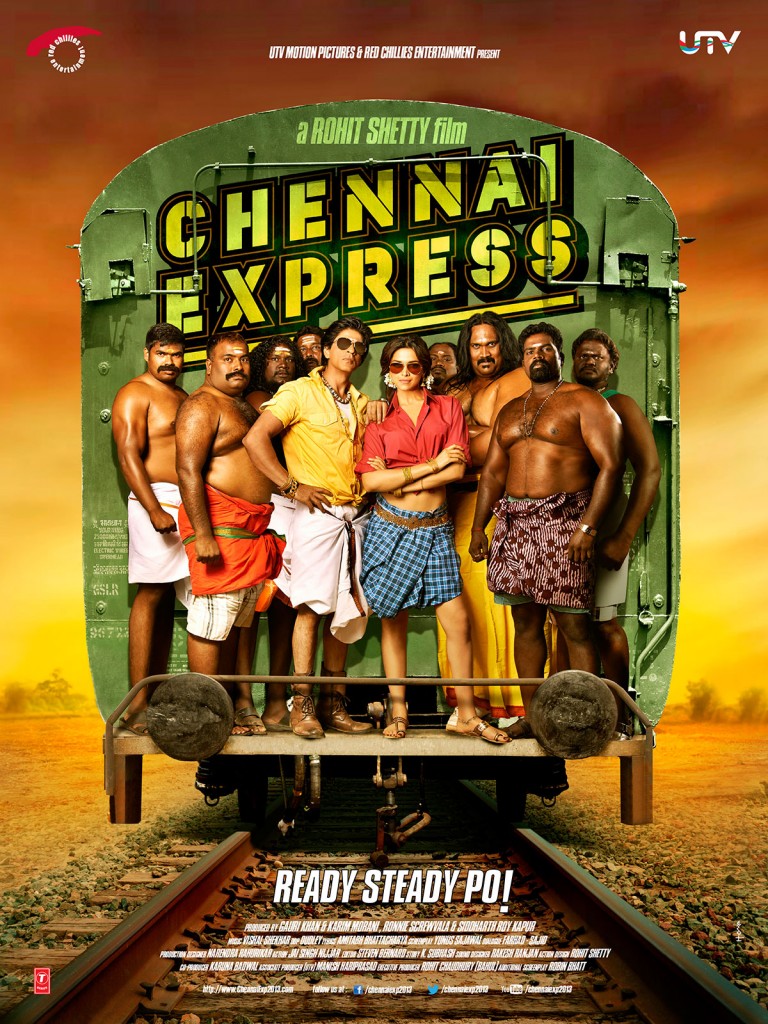
     Chennai Express got you your money, sure. I hope you enjoy the pelf. 
    So go ahead, wear your madras checks (or RA-One costume) and do your worst. But know this: Playing a forty year old Rahul getting excited about an upcoming Goa trip with friends and cracking loud, crass jokes is not how your core audience gave you your success in the first place. 
    Just to put it in perspective, looking for "hot babes/dudes" in Goa is understandable in 16 year olds. Your son and daughter will soon be asking for permission for that trip, if they have not already.
    In 40 year olds, it is plain creepy. When you do that on screen, you tell hundreds of men in India that it is OK to do so. Is it your fault people people behave foolishly? No. Is it your responsibility to make sure you're not worsening the situation, if not bettering it? Yes. 
    How can one do it in out and out commercial movies? Case in point: scene where Chulbul Pandey tells his wife "aap meri patni ho, ghulaam nahi..." after knowingly bothering her over odds and ends while she's busy doing household chores.
    That Khan knows he has a following: people who blindly and stupidly ape what he does on screen. He is not to blame for that, neither can he control it. None of you want to, either. So in his home production, he is making some effort to use that power to drill sense into our collective heads. 
    And you are the smartest of them all, are you not, SRK? With the biggest following among them all?     
    We made you into SRK because you acted in slightly "different" movies: movies that did not bank solely on shoulders going hichik-michik or mockery of people. Movies that were a break from the otherwise mindless dhoom dhadaka naach gana of the 90s. Only, you've taken it all back to the worst of that era and then dragged it down some more. 
    Remember "Kabhi Haan Kabhi Naa", "Darr", "Raju Ban Gaya Gentleman",  "Dilwale Dulhaniya..", "Chak De...", "Swades",  even "Dil Toh Pagal Hain" and "Kal Ho Na Ho"?  
    Know what, SRK? We do not owe it to you to make you successful. It is quite the other way round.
    You made Billu and  Ra-One. We were taken aback, but we let it slide. You made a Jab Tak Hain Jaan, we were hurt but it was more abhimaan (speaking of remakes, why not that one?) than despise. But that was when the feeling that you were taking us for granted really sank in. 
    Because a man as smart as SRK makes one mistake. Ok, two. We were ready to indulge you and your pride.     "See? Only SRK can make this bad a movie and still recover his money and make the audience go with it."
    The third time, it is not a mistake, it is a calculated move.
    The fourth time, it is an insult. A slap across our faces. You are telling me, us, that you do not care for the very audience that made you what you are. The one that you represented: the urban, not so loud, not so crass male. We called you King Khan not because you could churn out badly rehashed inanities, but inspite of that.          Now you've taken it too far.
      Fine, you want to be really popular in Tamil Nadu. The "south", in general. Did you really have to take what represents the worst of Tamil cinema and add hindi dialouges to it to do that? 
    You, SRK? The man who could look into the camera, smile his dimpled smile and make the whole theater go weak in the knees? The most romantic of all heroes Bollywood has seen since I started watching Hindi movies? 
    The man who taught the Bollywood audience that not always is the hero white and villain black? That there are greys to be considered? 
    So, what happened? 
    You aged? People do that.
    Mr. Bachchan was more masala and more commercial than you've been in your peak, and he evolved. He tried a Lal Badshaah and some, quickly realised his mistake and there on, changed course. 
    He did not let his ego stop him from playing characters that fit his age. It only made people respect him more, and as far as my layman's understanding goes, money isn't really a problem for him any more.
    The other Khan, Aamir, did it and he wasn't even as famous or popular back then as you were. I doubt he has as much muscle in the industry as you do, either. Ranbir Kapoor, about half your age and a quarter of your experience, does it. So it is not about age, position or experience. It is about wanting to or not wanting to.  
    When my friends and I fell for you, it was because you were talking to us in a language we understood. Because you drilled into our heads a simple equation. Rahul=love, honour, honesty, sensibility.
    Because even though that raised our standards to such ludicrous highs that we never found our perfect men all through teenage, we were OK with it. Because when you say "Rahul, naam toh yaad rahega," our hearts still skip a beat.
   Because when you are Kabir Khan, you are able to raise a very predictable plot to above average. Simply because you play Khan like noone else could.
    That pride, I understand. This, I do not.
    This Rahul, I do not know.
    But this Rahul gets you your money, so I'm guessing you'll keep at it. But I'm going to stay away till there's a  trailer that shows me you are being you again, doing something that justifies my liking you. Our liking you. 
    I'm hoping that could be this Diwali. I'll watch out for the posters.
    But I know there's a good chance it won't, for easy money is an addiction. So long, then.
    
    P.S: Deepika Padukone is the only saving grace in Chennai Express. I hope you thanked and paid her enough.

   P.P.S: I know I'm nitpicking now, but Kalaripayattu and Kathakali are from Kerala. Chennai is in Tamil Nadu. You got the Bharatnatyam part right, though.